MAGNETIC
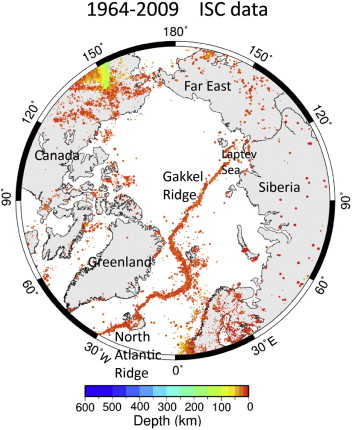
A “Sonogram” of the Inner Earth reveals a 27% the size of the Earth iron sphere spinning inside it, a little faster than Earth, faster and faster en-route to embed in a knot in Earth’s Arctic crust, its equator against 85° latitude spinning west to Greenland stops spinning around in Earth's top stuck, earthquake! Earth's core equator tilted down in 2003 angled towards Oregon, this time back up in Earth's northern hemisphere. Where core of Earth can only take to 2029 stuck in Arctic for bubble in Earth's top to blow-up like it did in Siberia, "caused history’s biggest extinction by lava flow in a chocking concentration of sulfur dioxide carbon dioxide and other gasses killing off 90 percent of ocean species and more than 70 percent of land creatures”, I found in 2002 "Science" Magazine article not going to be available at http://www.sciencemag.org about last time Earth’s core ran into Earth's crust, occasionally smokes out of Mt. Shasta's top and Shastina before erupting facing a star bounce Sun on Earth. Nostradamus 2 asteroids missing Europe blew-up, asteroid destroys property sending Russians to hospitals. Earth's core expanding each time it blows-up, like in Siberia as big as Texas, though it could pop out of Arctic as big Moon squirted into space. Earth falls apart like happened to rest of Mercury. PDF files show Earth's core rushing up inside Earth, spun-off west to its 85° latitude circle, spinning northwest, receding from Larson Ice Shelf. Core of Earth gone up, away from southern hemisphere faster and faster poured down lava pressure erupts a volcano north of Antarctica. Earth's magnetic core stops erupts through Arctic trapdoor Australia hit by Wormwood or Sun.
 Anyone
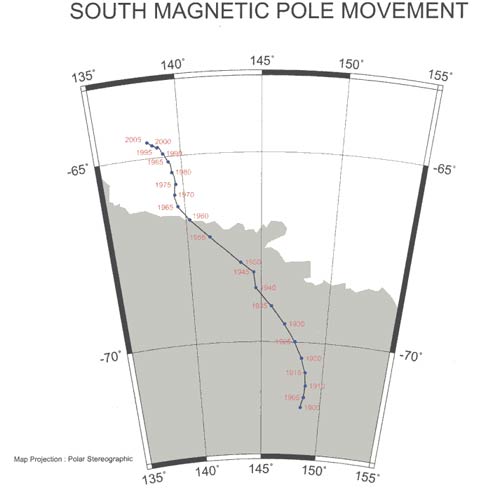
can see from the POLE MOVEMENT” maps here, magnetic core of the Earth
progressively thrusting its axis north pole end upwards inside the Earth to its northwest, flooding more
molten lava into Earth’s southern hemisphere. With the Universe expanding faster and faster increasing lithosphere pressure pressing down to Antarctica, churning lava heat hotter Internal lava pressure built up, southern hemisphere in south pole retreat cracked coast of Chile an 8.8 & 8.2 after New Zealand 8.8 earthquake. Volcanic eruption. Earth's lava under southern hemisphere pushed under its Moon size of magnetic core, spinning faster and faster than 900 mph, Earth clockwise spin, lava hotter and hotter across northern hemisphere interior, besides 8+ billion more people. Last time star Sirius came around Noah figured out hundred years ship, tree built job. 2023 Coup d' 'et at racists nationalists, we win the West again, 6 years fast shuttle settle Thor wave killed life.
Anyone
can see from the POLE MOVEMENT” maps here, magnetic core of the Earth
progressively thrusting its axis north pole end upwards inside the Earth to its northwest, flooding more
molten lava into Earth’s southern hemisphere. With the Universe expanding faster and faster increasing lithosphere pressure pressing down to Antarctica, churning lava heat hotter Internal lava pressure built up, southern hemisphere in south pole retreat cracked coast of Chile an 8.8 & 8.2 after New Zealand 8.8 earthquake. Volcanic eruption. Earth's lava under southern hemisphere pushed under its Moon size of magnetic core, spinning faster and faster than 900 mph, Earth clockwise spin, lava hotter and hotter across northern hemisphere interior, besides 8+ billion more people. Last time star Sirius came around Noah figured out hundred years ship, tree built job. 2023 Coup d' 'et at racists nationalists, we win the West again, 6 years fast shuttle settle Thor wave killed life.
Receding magnetic core to Earth's top caused the ocean floor of South Atlantic to lose its magnetism. Up to spinning on polar side. Entire southern interior of Earth now all molten lava, under Earth's magnetic core. Earth's crust under Arctic Ocean heating up because iron ball as big as Moon on 85° latitude spinning blows-up wedged here, in Earth's top expands or collapses, falls apart with Sun bounced on Portugal. Brown dwarf.
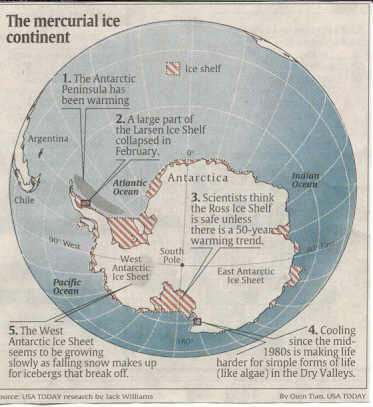
Lava shift causing Antarctica at its Antarctic Peninsula thaw out coast of. Scientists obviously seem clueless about what was causing rising ocean temperatures but a volcano erupt cause Larsen Ice Shelf melting, that collapsed in February 2002, lava boiling. Global climate change iron Earth's NORTH MAGNETIC POLE MOVEMENT and SOUTH MAGNETIC POLE MOVEMENT. Iron core ends of Earth, spinning around in Earth's top, against lava flow west filled up southern hemisphere. Axis floating north/south pole magnetism spinning bubble. Use to be U.S. Geological Survey official maps both show big increase in speed of Earth's core rushing up it hit it's top, since broken free from fountains of the deep in 1975. Hit Earth top in 2011 (4) times, flooding Ocean with radiation 9 months before 5124 Mayan calendar end of the world 12/24/2011, poisoning seas to North America by Spring 2014, for 50,000 years. Jesus said end of the world happens to fig trees putting forth new leaf. To Sun bounce on Portugal. Four red moons in a row red dwarf Wormwood frozen brown dwarf misses Sun falls apart on Australia. Red dwarf star hits Sun. End of world before another calendar 52 years!
Earth's core magnetic asteroid sphere in lithosphere going to pop Japan Haiti Chile and New Zealand tsunami, 03/11/2011 early for Short Count end Sun ellipse swing back at Milky Way Galaxy. Leading up to the final disaster. Government will not say they put it all together with their Rovers, getting richer off of politics. Media don't want a solution reports, end of country, 2025 unless it cut off Social Security and Medicare. Know they cannot survive the red dwarf star in 2029. Earth's core poles spinning aligned turning on 85° like a barrel floating on molten lava towards a opening, momentum west. My solution effectively save U.S.A. load out enemy recycle resistance give notice so any get away or get a ticket out. Military, militia, the racist Majority riot up and down streets depopulation load out or worse. Present all of the situations at Tribunal, chart all of the responses. Post favorites I go with dictating a 5 year reign. Expect my funds run out, or duty! Natural talent ready vanish before run out of money.
Wait any longer? Revolution Military racist majority, patriotic. Just new government. License to kill leftist criminal alien, police public sweeps corner crooked politician gangster lawyer feminists with their niggers conspiracy, dump it to sharks national debt. Secrecy wants hurry away into all of their Cold War bomb shelters, at the American people's expense. U.S. Dollar collapse inflation wreck national spirit. Sudden takeover I arm change everything U.S. Armed Forces turn the table on our enemies hate crime rules in my Power by Default. Militia roundup run out aliens. White power verses all the bad, black gang tribe. God sort them out. White America my only chance to restore Land of the free. America an armed conflict with business politics and legal system. Our fighting forces in a land grab divide booty take a house. Purge American turf of natural enemies. Public enemy massacre nationalizing business religion bank, replacing National Debt with Third Reich. Employ citizen White America equal share of booty from American Revolution survival plan, my Power by Default, right cleanse America of the world against us. Separate friend from foe. Discriminate!
Scientists ponder the
ramifications of an Antarctic ice shelf’s breakup
By Jack Williams
USA TODAY
CLINTON, N. Y.– The one thing that’s absolutely clear about the collapse of Antarctica’s Larsen B Ice Shelf last month is that seawater now washes over an area roughly the size of Rhode Island that thick ice had covered for centuries.
“We were astonished when we saw whales, penguins and seals in the place where for thousands of years there was 250 meters (820 feet) of ice,” says Pedro Skiver of the Argentine Antarctic Institute.
Skvarca, who heads the institute’s glaciology program, colleague Hernan DeAngelis, and two pilots flew a Twin Otter airplane on March 13 only 300 feet above the thousands of small icebergs floating where the ice shelf had begun breaking up in February.
Why did the ice shelf break up, and what does this mean, if anything, for the future?
About 60 scientists from nearly a dozen nations wrestled with these questions at a recent conference at Hamilton College, sponsored by Hamilton, Colgate University and the National Science Foundation (NSF).
The consensus: Melting Antarctic ice isn’t a threat for at least the next few decades, but could be some day, and scientists need to learn more about how the oceans, atmosphere and ice interact.
The collapse of the Larsen B Ice Shelf wasn’t a complete surprise. Scientists have long been aware that things are stirring on the Antarctic Peninsula.
Bernhard Lettau of the NSF’s Office of Polar Programs compares the growing knowledge of Antarctica’s ice to an image slowly forming on a computer, pixel by pixel, with a blue dot here and a red dot there. “We’re trying to imagine what the big picture looks like.”
There are no doubts about one point: The breakup and eventual melting of an ice shelf, like the melting of icebergs, does not increase sea levels – for the same reason melting ice in a glass of water does not make the glass overflow. The ice is already floating.
The ice sheet that covers more than 97% of Antarctica has built up over thousands of years as snow falls but never melts. As ice piles up, it slides slowly toward the continent’s edge to form ice shelves that are attached to the ice sheet but are floating in the ocean.
As far as scientists can tell, the total amount of Antarctic ice has stayed about the same for 100 or so years. Falling snow makes up for the ice lost when big icebergs break off.
The Larsen B Ice Shelf is on the part of Antarctica that looks like an arm reaching out toward South America. While the spotty, available weather records seem to indicate that the rest of Antarctica might have cooled, the peninsula has warmed by an average of about 4 degrees Fahrenheit since the 1950’s.
Researchers generally agreed that the final straw for the Larsen B Ice Shelf was unusually warm temperature during the Antarctic summer of December 2001 through February 2002.
Skvarca says available records show it was the warmest summer since people first brought thermometers to the peninsula. However, that record goes back only 100 years for one location and less than that for others, which is one reason why more than half of the conference presentations were on studies of the peninsula’s past environments.
These included a report by Eugene Domack of Hamilton College on his research last December that showed the Larsen B Ice Shelf had been in place since the end of the last ice age, about 12,000 years ago.
The disintegration of Larsen B seems to be “something outside the normal climate variability,” Domack says. “The warming seems to have been extraordinary. Does that mean it’s related to greenhouse gases? Well, that’s a little bit more difficult to say.”
The term greenhouse gases has become shorthand for gases such as carbon dioxide that humans are adding to the air, causing Earth to warm faster than it would without human help.
Antarctic Peninsula warming would fit into a pattern of human-caused greenhouse warming, but computer models of climate do not create the warming seen in the peninsula, John King of the British Antarctic Survey told the conference. “On the face of it, this suggests that the warming is not caused by humans, but maybe the models aren’t good enough” to show such climate detail.
One big question is why the peninsula is the only part of Antarctica warming so much.
Domack pointed to a recent Science magazine research report that the ocean waters that surround Antarctica have been warming. The Antarctic Peninsula juts out into the wind-driven ocean current that circles Antarctica. Maybe the peninsula is warming quickly because “it is the finger that is stuck into the warming kettle,” Domack says.
Research described at the conference showed that the Antarctic Peninsula’s climate has managed to do more than steadily warm since the end of the last ice age. Nature has created ups and downs in temperatures and amounts of ice without any human help.
Even so, he says, the Larsen B disintegration is “a great lab experiment. We're seeing something that doesn't have a lot of global consequences but serves as a glimpse of what’s going to happen elsewhere.”
" Earth Systems Polar Motion Monitor
Major Anomaly In Chandler's Wobble - 2005/2006
last revised February 8, 2006
The Earth's Wobble Has Paused
What this portends, no one knows.
(ECB - February 8, 2006, MWM) For at least three and a half weeks there
has been almost no movement of the spin axis in the normal spiral track
of Chandler's Wobble. See an extensive analysis of the pause in the wobble
as of February 8, 2006 at the web site. It is also being sent to subscribers
via email directly after this Bulletin."
http://www.michaelmandeville.com/earthmonitor/polarmotion/2006_wobble_anomaly.htm
This has to do with the axis Earth's core spins on, Earth's bubble inside made out of iron and nickel, 27% the diameter of the Earth up in Earth's northern hemisphere, at flat top, tilting west around Earth's axis spinning on its own axis. Star Sirius approaching Sun held Earth steady for three and a half weeks of not wobbling. Earth's bubble stops going west in it's spin reaches Arctic fault line trap door. Planet X in 2006 close enough to see three bright objects in a pyramid formation out in front of Sirius 4 moon white star up close. After light pyramid sat I found it at lower left of its Saturn planet of 10 moons, an 11th and 12th moon peered over Hogback for 5 mornings. Sirius magnetism stopped pole movement balanced Earth magnetism, stabilized Earth for 3 1/2 weeks of not wobbling. Earth falling over to the east in every 8.0 or more earthquake until axis of core of Earth blows-up in it's Fault line here. Heard media reason no one survives Sun a Red Giant in bunkers.
The iron bubble in the Earth the size of the Moon, spinning further and further off-center from Earth's axis every 5 years until top-heavy like an off-center load in a washing machine. So no wonder why Earth wobbles all week, until its core is connected to the Earth turns the Earth upside down facing a red dwarf star see it hit the Sun. Sirius' former inhabitant's evacuation spaceship 2029 browndwarf of red dwarf fall apart on Earth and Moon rips two Nostradamus asteroids across Europe.
The Best FREE Internet Radio and Music
SHOUTCAST
or to buy music


There needs be someone Super I get the world right, back to white.

The East might have to bury the West. New World Order cannot change right!
Instead new government ruthless leadership against all odds to the death right!
Where USA White American European, Western citizens Civilization. Ukraine.
Copyright © 2002, 2010, 2011, 2012, 2013, 2014, 2015, 2017, 2018, 2021, 2022, 2023 Lee Ronald Harrison
All Rights Reserved